
FOLLOW US ON SOCIAL MEDIA
Follow. Like. Share
Why Revegetation Matters
In coastal environments like the Hamptons, vegetation plays a critical role beyond aesthetics.
A properly revegetated property helps:
Stabilize soil and prevent erosion
Protect groundwater and drainage systems
Restore natural screening and privacy
Improve long-term plant health and resilience
Ensure compliance with local town codes.
Properties that remain over-cleared often face violations, delayed permits, and reduced market appeal — making timely restoration essential.
When RevegetationIs Required
- Revegetation is typically required when:
- Clearing exceeds permitted limits
- Natural vegetation buffers are removed
- Construction disrupts existing plant systems
- A property fails town inspection or is flagged during sale
In areas like East Hampton and Southampton, revegetation plans are often tied directly to permitting and must be approved before project completion or property transfer.
The Revegetation Process
1. Site Evaluation
Every project begins with a detailed assessment of the property.
This includes:
Extent of clearing or disturbance
Soil conditions and drainage patterns
Existing vegetation and remaining buffers
Environmental constraints (wetlands, setbacks, etc.)
2. Compliance & Planning
A revegetation plan is developed to meet town requirements while maintaining a refined, intentional landscape.
This typically involves:
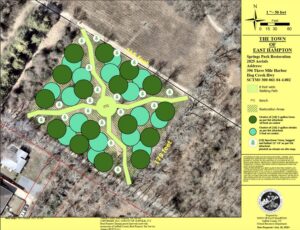
Mapping required planting areas
Selecting approved/native plant species
Preparing documentation for town submission
Coordinating with environmental consultants if needed
3. Strategic Planting Design
Revegetation does not have to feel wild or unmanaged.
A well-designed plan balances natural restoration with structure by incorporating:
Native grasses for stabilization and movement
Flowering perennials for seasonal interest
Shrubs for layering and screening
Specimen trees for long-term structure
The goal is to create a landscape that feels both natural and composed.
4. Installation & Restoration
Once approved, installation is executed with precision.
This includes:
Proper spacing and grouping for plant success
Soil preparation and amendments
Erosion control where necessary
Initial watering and establishment care
5. Monitoring & Establishment
Revegetation does not end at planting.
Ongoing monitoring ensures:
Plants establish successfully
Required coverage is achieved
Compliance is maintained over time
In many cases, follow-up inspections are required by the town.
Choosing the Right Plant Palette
Plant selection is critical in ensuring both compliance and long-term success.
Commonly used revegetation plants in the Hamptons include:
- Structural Shrubs
- Inkberry Holly (Ilex glabra)
- Bayberry (Myrica pensylvanica)
- Perennials & Flowering Layers
- Summersweet (Clethra alnifolia)
- Lavender
- Black-eyed Susan
- Ornamental & Native Grasses
- Switchgrass (Panicum virgatum)
- Little Bluestem
- Ammophila (Beach grass for dune areas)
These selections are chosen for their ability to withstand coastal conditions, resist deer, and establish reliably.
Balancing Compliance with Design
One of the most common concerns is that revegetation will make a property feel overgrown or unmanaged.In reality, when handled correctly, revegetation can:
- Enhance curb appeal
- Reinforce property structure
- Blend seamlessly with existing landscape design
- Increase perceived property value
The key is intentional layout, proper spacing, and long-term maintenance planning.
Common Mistakes to Avoid
- Using non-approved or invasive plant species
- Over planting without structure
- Ignoring drainage and soil conditions
- Delaying compliance until inspection deadlines
- Treating revegetation as a one-time fix instead of a phased process
Revegetation in the Hamptons is both a regulatory requirement and an opportunity.
When approached correctly, it restores more than compliance — it rebuilds the integrity of your landscape, creating a property that feels complete, resilient, and aligned with its natural surroundings.