FOLLOW US ON SOCIAL MEDIA
Follow. Like. Share
Tips for Growing and Maintaining healthy Hydrangeas
In order to achieve the best results, there are two ideal seasons to plant shrubs like hydrangeas: spring and fall. These seasons offer cooler air temperatures, allowing shrubs to establish without stress after planting, while the soil remains warm enough to support root development. In coastal environments like the Hamptons, this timing is especially important—giving plants the stability they need before exposure to summer heat, wind, and salt air.
1. Plant at the Right Time
Hydrangeas thrive when planted in early spring after the ground thaws or in early fall before the first frost. Planting outside of these windows—especially in peak summer—forces the plant into survival mode. Instead of developing a strong root system, it struggles to retain moisture and often declines over time. In coastal landscapes, proper timing is foundational to long-term success.
2. Prioritize Morning Sun, Protect from Harsh Exposure
Hydrangeas perform best with morning sun and afternoon protection. Too much direct afternoon exposure—especially on open properties—can lead to leaf scorch, wilting, and reduced bloom production. Position hydrangeas where they receive early light, with natural buffering from structures, trees, or hedging later in the day. This creates a more stable microclimate, which is critical in the Hamptons where wind and reflected heat can intensify conditions.
3. Build the Right Soil Foundation
Healthy hydrangeas start below the surface. Coastal soil is typically sandy and fast-draining, which means nutrients wash away quickly. Without proper soil preparation, even well-placed plants can struggle. Incorporate organic compost at planting, apply mulch to regulate moisture and temperature, and maintain consistent watering. For bigleaf hydrangeas, soil pH will also influence bloom color—acidic soil produces blue tones, while alkaline soil produces pink—but overall soil quality is what determines plant strength and longevity.
4. Prune with Precision
Hydrangeas require intentional pruning, not routine cutting. Old wood bloomers such as bigleaf and oakleaf hydrangeas should be pruned after flowering in late summer, while new wood bloomers like panicle hydrangeas should be pruned in late winter or early spring. Pruning at the wrong time removes developing buds and reduces blooms for the entire season. Focus on removing damaged or overcrowded growth and maintaining a natural, balanced shape.
5. Water Deeply and Consistently
Hydrangeas need steady moisture, especially during establishment. However, shallow or excessive watering creates weak root systems. Water deeply so moisture reaches the root zone, avoid frequent light watering, and use mulch to retain moisture. In coastal conditions, wind can dry soil faster than expected, so consistency is more important than volume.
6. Monitor Plant Health and Catch Issues Early
Hydrangeas are highly responsive and will show signs when something is off. Yellowing or spotted leaves, powdery residue, browning edges, premature leaf drop, and reduced blooms are all indicators of stress or disease. These issues are often linked to fungal conditions, particularly in humid coastal environments where moisture lingers on foliage.
7. Fungicides Are Essential for Long-Term Health
In the Hamptons, fungicide treatments are not optional—they’re a critical part of maintaining hydrangeas at their best. High humidity, dense plantings, and limited airflow create ideal conditions for fungal diseases like powdery mildew, leaf spot, and blight. Without preventative care, these issues don’t just affect a few leaves—they compromise the entire plant, leading to reduced bloom quality, early defoliation, and long-term decline.
Preventative fungicide applications protect the plant before problems take hold. Apply treatments proactively throughout the growing season, ensure proper spacing to improve airflow, and avoid overhead watering late in the day. Waiting until visible damage appears means the plant is already under stress—and by that point, you’re managing damage instead of preserving beauty.
8. Choose the Right Varieties for Coastal Properties
Not all hydrangeas perform equally in coastal conditions. Panicle hydrangeas are highly durable and structured, making them ideal for larger properties. Bigleaf hydrangeas offer the classic Hamptons look but require more protection and care. Oakleaf hydrangeas bring a more natural texture and work well in layered plantings. Selection should always align with the architecture and layout of the property to maintain a cohesive design.
9. Maintain Structure Over Time
Hydrangeas should improve with age, not become overgrown or inconsistent. Ongoing maintenance ensures balanced growth, consistent blooming, and long-term plant health. This includes seasonal pruning, soil conditioning, and spacing adjustments as plants mature. In well-designed landscapes, maintenance preserves the original intent and keeps the planting looking refined year after year.
Hydrangeas should enhance your landscape—not become a maintenance challenge.
Schedule a Consultation and develop a planting and maintenance plan tailored to your property.
The Most Common Hydrangea Diseases
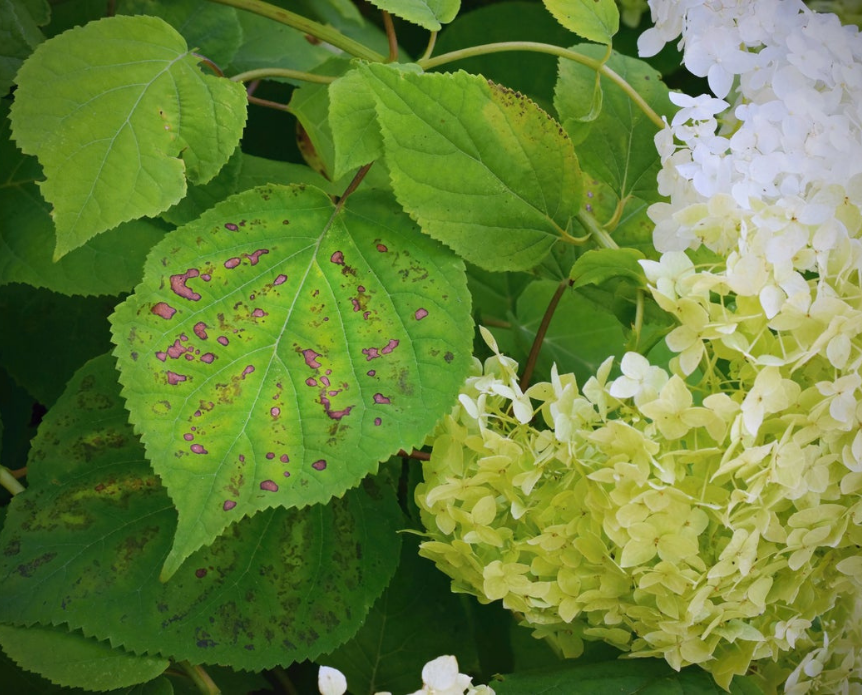
Cercospora Leaf Spot: The most common issue, appearing as small, circular brown or tan spots with dark purple halos. It typically begins on lower leaves and works its way up the plant—if left untreated, it leads to premature leaf drop, thinning foliage, and a weakened plant that struggles to support full, healthy blooms.
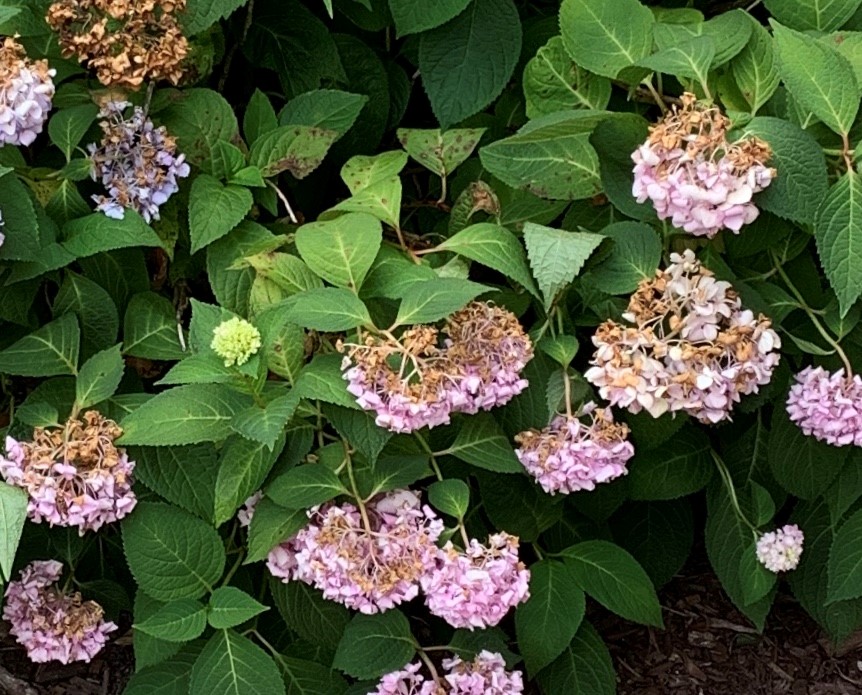
Anthracnose: Causes irregular leaf spots and flower blight, often showing as sunken, dark-bordered lesions on both leaves and petals.
Without intervention, it can quickly spread during wet conditions, damaging blooms at their peak and significantly reducing the plant’s overall appearance and vigor.
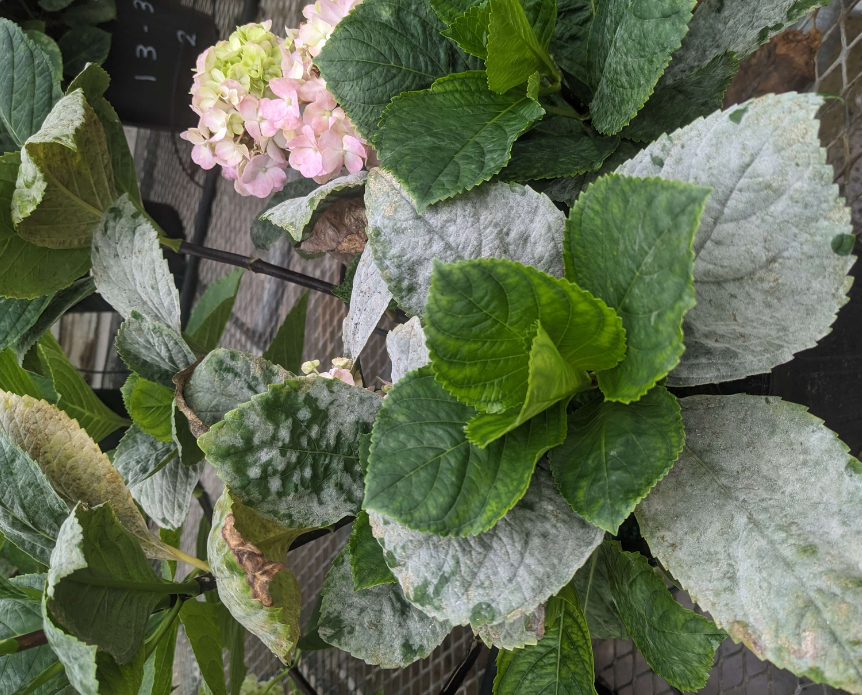
Powdery Mildew: Identified by a white, powdery coating on leaves and stems, often followed by yellowing or purpling of foliage. If ignored, it restricts photosynthesis, stunts growth, and leaves hydrangeas looking dull, discolored, and underdeveloped.