
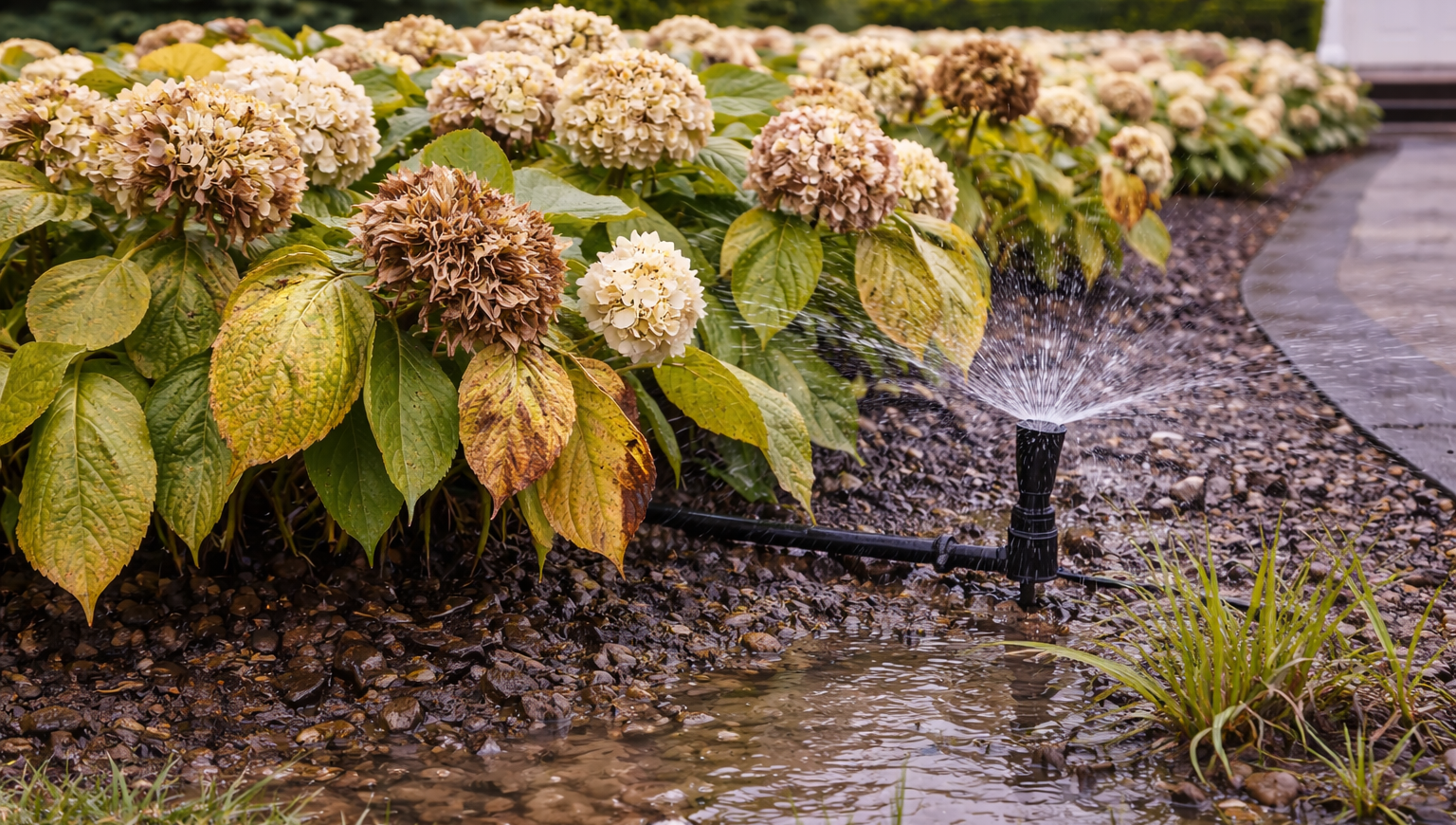

Overwatering: The Quiet Damage Undermining Your Landscape
FOLLOW US ON SOCIAL MEDIA
Follow. Like. Share
Water is essential to a healthy landscape—but too much of it does more harm than most homeowners realize.
Overwatering disrupts the balance of the soil by displacing oxygen, effectively suffocating root systems. This condition—often referred to as root asphyxiation—prevents plants from absorbing water and nutrients, even when both are present. The result is a landscape that appears stressed, inconsistent, and increasingly vulnerable over time.
What Happens Below the Surface
Healthy soil contains a balance of air and moisture. When that balance is lost, roots begin to decline.
Excess water saturates the soil, eliminating the oxygen pockets roots depend on. As conditions persist, roots weaken, turn soft or discolored, and eventually rot. Once compromised, the plant can no longer support healthy growth above ground.
At the same time, water moving through oversaturated soil carries essential nutrients—like nitrogen—beyond the reach of the root zone. What remains is depleted, unstable soil that struggles to sustain plant life.
Visible Signs of Overwatering
The damage often presents itself in ways that are easy to misinterpret.
Lawn Conditions:
Grass may feel soft or spongy underfoot. You may notice thinning areas, bare patches, or unusually fast-growing thatch. Turf can take on a pale or yellow tone as nutrients are washed away.
Plant Health:
Plants may wilt or droop despite consistently wet soil. Leaves often yellow (chlorosis), develop brown edges, or drop prematurely—symptoms commonly mistaken for underwatering.
Root Decline:
If inspected, roots may appear brown, mushy, or deteriorated, rather than firm and white.
Additional Indicators:
Cracking fruit, mushrooms, algae growth, and the presence of moisture-loving weeds like nutsedge all point to excessive water.
Wider Impact on the Landscape
Overwatering doesn’t stop at plant health—it affects the entire environment around it.
- Nutrient loss: Essential elements are leached from the soil before plants can absorb them
- Fungal pressure: Constant moisture creates ideal conditions for mold and root diseases
- Pest activity: Wet environments attract insects such as fungus gnats
- Soil instability: Runoff and erosion can degrade planting beds and lawn areas over time
How to Identify the Problem Early
One of the simplest ways to assess soil conditions is with a basic probe test. If a screwdriver or similar tool slides easily more than six inches into the soil with little resistance, the ground is likely oversaturated.
Other indicators include standing water, persistent runoff, and areas that never seem to dry out—even days after rainfall.
A More Controlled Approach
Proper irrigation isn’t about consistency—it’s about control.
Watering should be adjusted based on soil type, drainage, plant material, and seasonal conditions. In many cases, reducing frequency while increasing depth allows moisture to penetrate effectively—without overwhelming the root zone.
Left unaddressed, overwatering will continue to weaken your landscape from the ground up.
Get Your Irrigation Right
If your lawn feels inconsistent, declines without a clear cause, or never seems to fully recover, your irrigation may be working against you.
We assess system performance, drainage conditions, and plant requirements to bring your landscape back into balance.
Request an irrigation evaluation and ensure your property is being watered with precision.