

Hydrangeas That Perform Best in the Hamptons: Coastal Growing Zone
FOLLOW US ON SOCIAL MEDIA
Follow. Like. Share
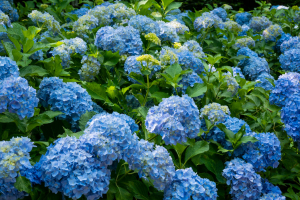
1. Bigleaf Hydrangeas (Hydrangea macrophylla)
Includes: Nikko Blue, Endless Summer, Elizabeth Ashley Blue
These are the hydrangeas most associated with the Hamptons—dense, saturated color, and full summer presence.
What defines them:
- Mophead or lacecap blooms
- Color shifts based on soil pH (blue in acidic, pink in alkaline)
- Bloom on old wood (previous season’s growth)
Why they thrive in the Hamptons:
Long Island’s naturally acidic, sandy soils often support true blue coloration, especially with varieties like Nikko Blue. When properly placed, they deliver the classic coastal look people expect.
Where they struggle:
- Late spring frost can damage buds
- Salt wind exposure causes leaf burn and stress
- Full sun + heat leads to wilting and inconsistent bloom performance
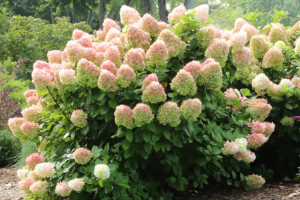
2. Panicle Hydrangeas (Hydrangea paniculata)
Includes: Limelight, Pee Gee (Grandiflora), Vanilla Strawberry
This is the most reliable hydrangea group for coastal landscapes—and the backbone of high-performing designs.
What defines them:
- Cone-shaped blooms
- Flower progression: white → green → pink
Why they thrive in the Hamptons:
- Not affected by late frost
- Tolerate full sun, wind, and coastal exposure
- Adapt well to sandy, fast-draining soils
According to Cornell Cooperative Extension and regional horticultural data, panicle hydrangeas are among the most environmentally adaptable hydrangeas in the Northeast, especially in coastal zones.
Best-performing varieties:
- Limelight – Clean, modern, holds structure
- Pee Gee (Grandiflora) – Larger, traditional, estate-scale planting
- Vanilla Strawberry – Controlled seasonal color transition
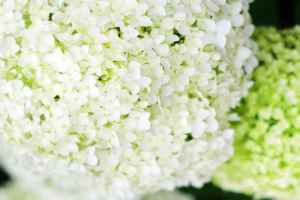
3. Smooth Hydrangeas (Hydrangea arborescens)
Includes: Annabelle, Incrediball
Native to the U.S., these hydrangeas are durable and adaptable—but require thoughtful placement to stay refined.
What defines them:
- Large, rounded white blooms
- Bloom on new wood
- Naturally softer, more relaxed growth habit
Why they in The Hamptons:
- Cold-hardy and consistent bloomers
- Adaptable to different soil types
- Less sensitive to pruning timing
Limitations in coastal settings:
- Stems can flop in wind or heavy rain
- Less tolerance for direct coastal exposure compared to panicles
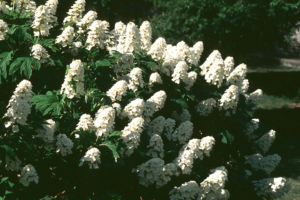
4. Oakleaf Hydrangeas (Hydrangea quercifolia)
Includes: Snow Queen
One of the most underutilized hydrangeas in the Hamptons—and one of the most valuable when used correctly.
What defines them:
- Cone-shaped blooms
- Distinctive foliage that turns deep red in fall
- Peeling bark provides winter interest
Why they thrive in The Hamptons:
- More tolerant of dry conditions once established
- Handles coastal environments better than bigleaf types
- Offers four-season value, not just summer bloom
Design placement:
- Morning sun, afternoon shade required
- Protected from wind (behind hedging, walls, or structures)
- Best used in controlled foundation plantings, not exposed perimeters
Design placement:
- Full sun to partial shade
- Ideal for hedges, screening, and structural repetition
- Works in exposed conditions where other hydrangeas fail
Design placement:
- Best in protected areas or interior beds
- Works as a secondary layer behind structure
- Should always be balanced with more controlled planting
Design placement:
- Partial shade preferred
- Ideal for layered planting and depth
- Works well transitioning between structured and natural areas