
Hamptons Lawn Care During a Heat Wave: What's Happening to Your Grass and How to Respond
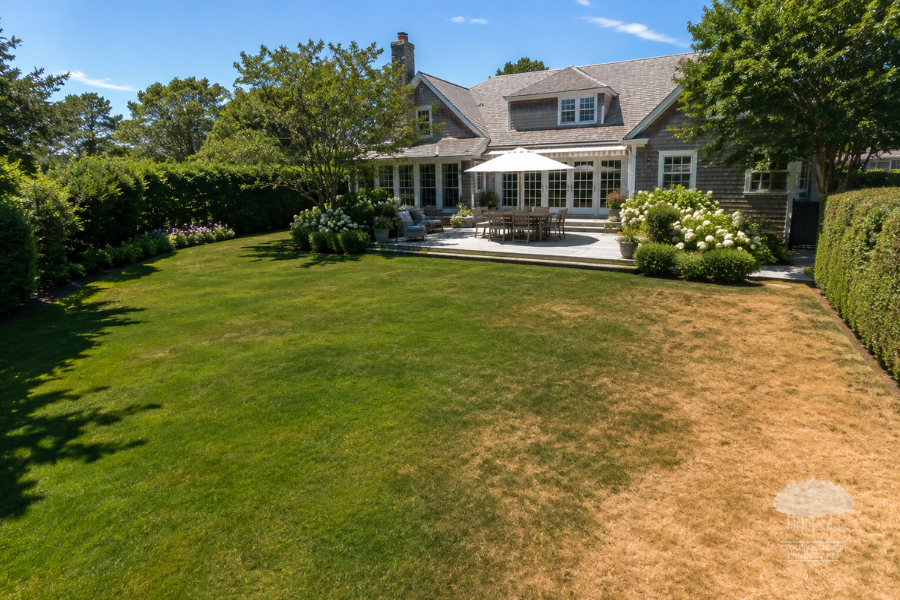
Summer in the Hamptons brings long days, salt air, and stretches of heat that push well past what a well-kept lawn is built to handle. For most properties in this region, the grass underfoot is cool-season turf — and cool-season grasses are not designed for prolonged heat. When temperatures climb and stay there, the effects show up quickly, and the decisions made during that window determine how well your Hamptons lawn care program carries the turf through to recovery.
Why Hamptons Lawn Care Gets Harder During a Heat Wave
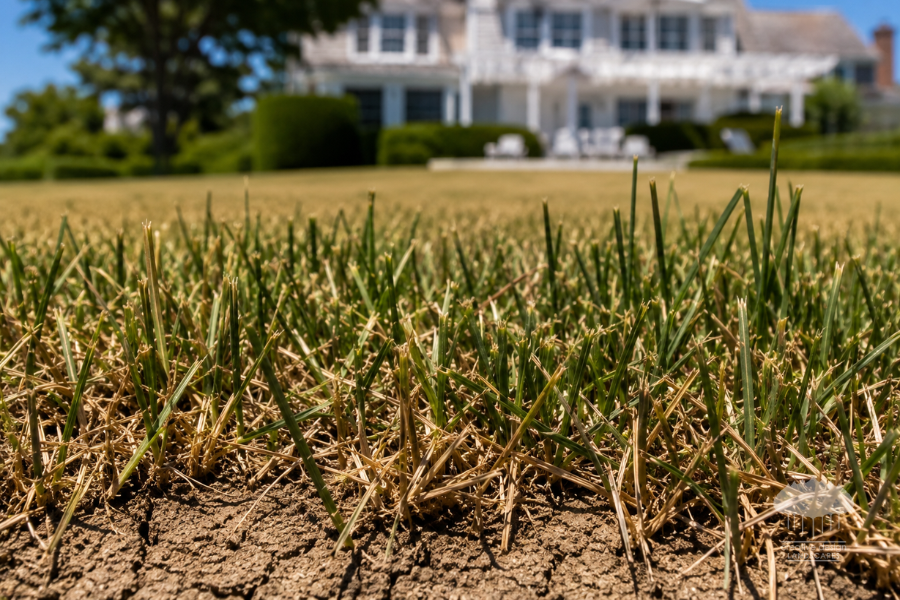
The grass found on most Hamptons properties — Kentucky bluegrass, perennial ryegrass, and fescue — thrives in a temperature range of 60°F to 75°F. Once temperatures push beyond that range, these grasses begin to slow down. Energy production drops while energy consumption increases, putting the plant in a deficit it cannot easily sustain on its own.
When heat climbs into the 90s and stays there for days at a time, the pressure on your turf becomes significant. The grass works overtime just to survive — drawing moisture from soil that is itself heating up and drying out — often resulting in discoloration, brittle blades, and slowed growth. The longer extreme heat persists, the harder the recovery. This is when consistent, thoughtful Hamptons lawn care makes the difference between a lawn that rebounds and one that doesn't.
What Heat Stress Looks Like on a Hamptons Lawn
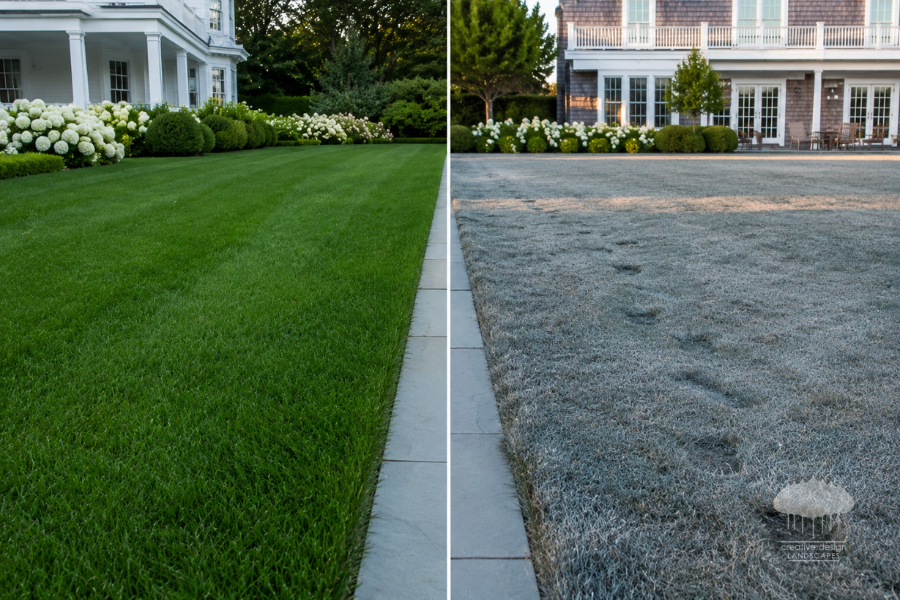
Heat stress on a Hamptons property does not always look the way homeowners expect. The signs appear gradually, and catching them early makes a real difference in how the turf comes through the season.
Early warning signs of lawn heat stress include:
- Grass blades turning a bluish-gray color — a sign the plant is losing moisture faster than it can absorb it
- Footprints and tire tracks that stay visible — healthy grass springs back; stressed grass stays flat
- Dry, brittle blades that crunch underfoot rather than flex
- Slow or stalled growth even during a period when the turf would normally be active
If the lawn has turned brown but still feels slightly springy underfoot, it is likely dormant rather than dead. Dormancy is a natural survival mechanism — the plant slows down to protect itself and will rebound once temperatures ease and moisture returns.
How Soil Health Affects Your Hamptons Lawn Care
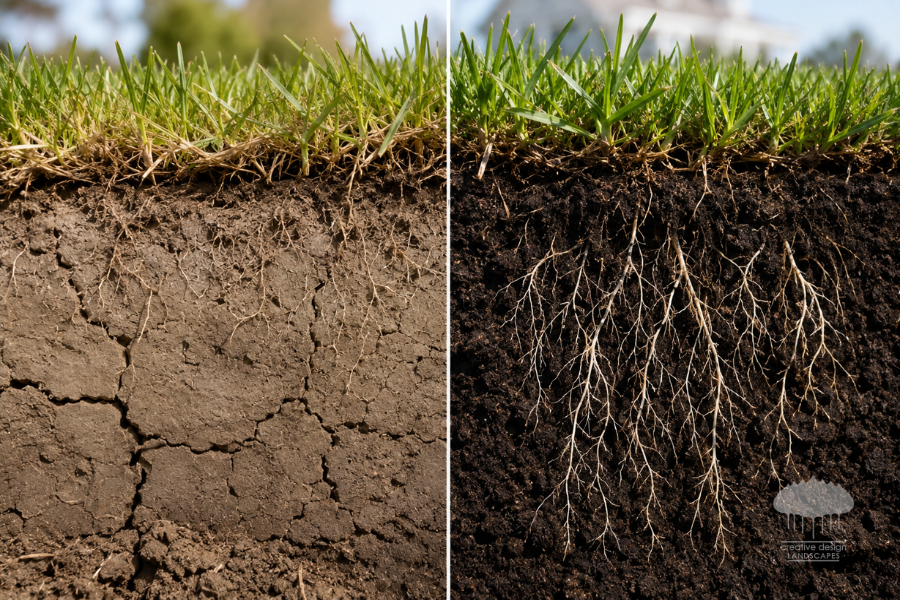
What happens below the surface matters as much as what is visible above it. Compacted soil prevents water, nutrients, and oxygen from reaching the root system, making turf significantly more vulnerable when extreme heat arrives. When soil cannot absorb or retain moisture effectively, even a consistent watering schedule may not deliver what the roots need.
Properties with compacted or clay-heavy soil will show heat stress earlier and recover more slowly than those with well-aerated, healthy ground. This is one reason why Hamptons lawn care decisions made in spring — aeration, topdressing, root health programs — have a direct impact on how the turf holds up under summer pressure.
Hamptons Lawn Care During a Heat Wave: Watering the Right Way
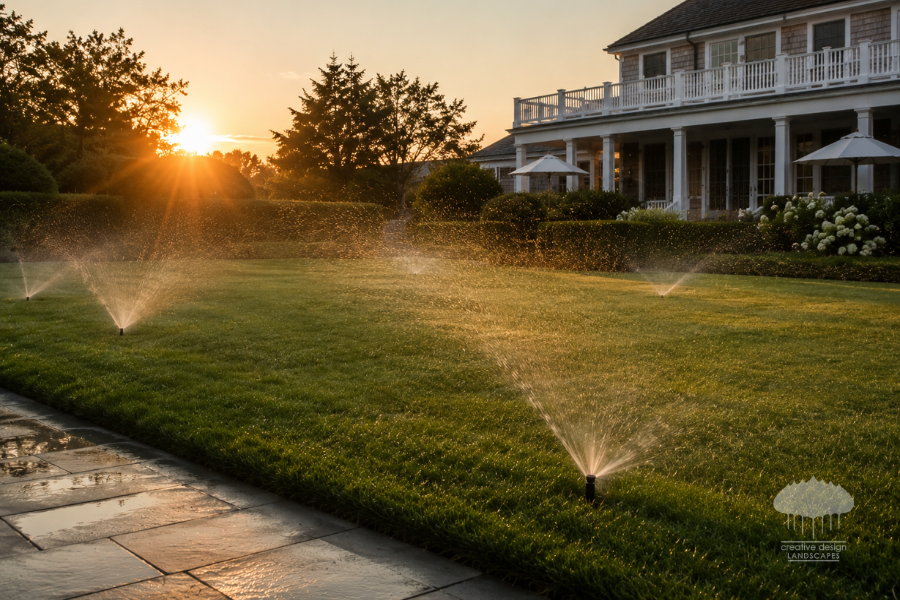
During a heat wave, watering strategy becomes the single most important factor in keeping a lawn alive and recoverable. Sound Hamptons lawn care starts with getting the watering approach right:
Water early in the morning. The window between 4 and 8 AM is ideal — temperatures are cooler, wind is lighter, and the soil has time to absorb moisture before the heat of the day drives evaporation. Watering midday wastes most of what is applied before it reaches the roots.
Water deeply and less frequently. Deep watering encourages roots to grow further down into the soil, where moisture is more stable and temperatures are cooler. Shallow, frequent watering keeps roots near the surface where they are most exposed to heat and drought stress.
Target the right amount. During extreme heat, aim for approximately 1.5 to 2 inches of water per week, factoring in any rainfall. This is higher than a standard summer week and reflects the additional evaporation pressure that comes with sustained high temperatures.
Avoid night watering when possible. While morning is ideal, evening watering is better than skipping it entirely. However, watering at night can increase the risk of fungal disease in already-stressed turf — so morning remains the priority.
Hamptons Lawn Care During a Heat Wave: Mowing the Right Way

Mowing habits are a critical part of responsible grass care during extreme heat. Cutting turf too short removes the very blade length that helps protect the soil and the root system beneath it.
During sustained heat, cool-season grasses should be kept at 3.5 to 4 inches in height. Taller blades shade the soil, slow evaporation, and encourage deeper root development. If the lawn is already under that threshold, avoid cutting until the heat passes if possible.
When mowing is necessary, keep blades sharp. Dull mower blades tear rather than cut cleanly, leaving the grass more vulnerable to moisture loss and disease at the cut point. Mow during the cooler parts of the day — early morning or early evening — and never remove more than one-third of the blade height in a single session.
What to Avoid in Your Hamptons Lawn Care Routine During Extreme Heat
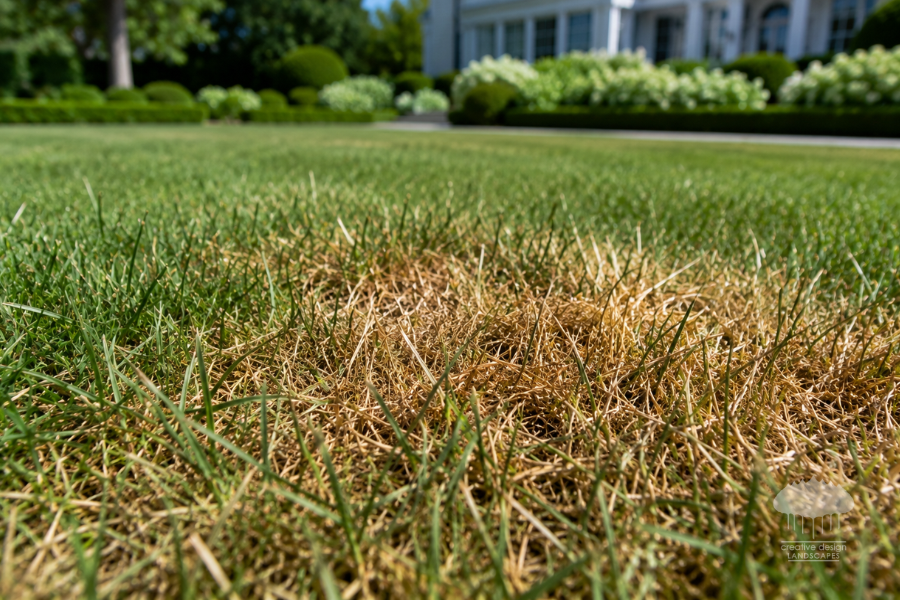
A few routine turf maintenance actions become genuinely harmful during prolonged heat and should be avoided as part of a responsible Hamptons lawn care program:
Fertilizing. Applying fertilizer during a heat wave encourages new growth at a time when the grass does not have the energy to support it. This increases the risk of fertilizer burn and disease. Hold off on any feeding programs until temperatures stabilize.
Herbicide and chemical applications. High temperatures increase the risk of volatilization — chemicals moving off-target — and can cause turf burn. If applications need to be made, they should be handled by a professional during cooler windows of the day.
Heavy foot traffic. Grass under heat stress does not recover from foot pressure the way healthy turf does. Limiting activity on the lawn during extreme heat reduces compaction and physical damage that slow recovery.
Dormancy vs. Damage: Knowing the Difference

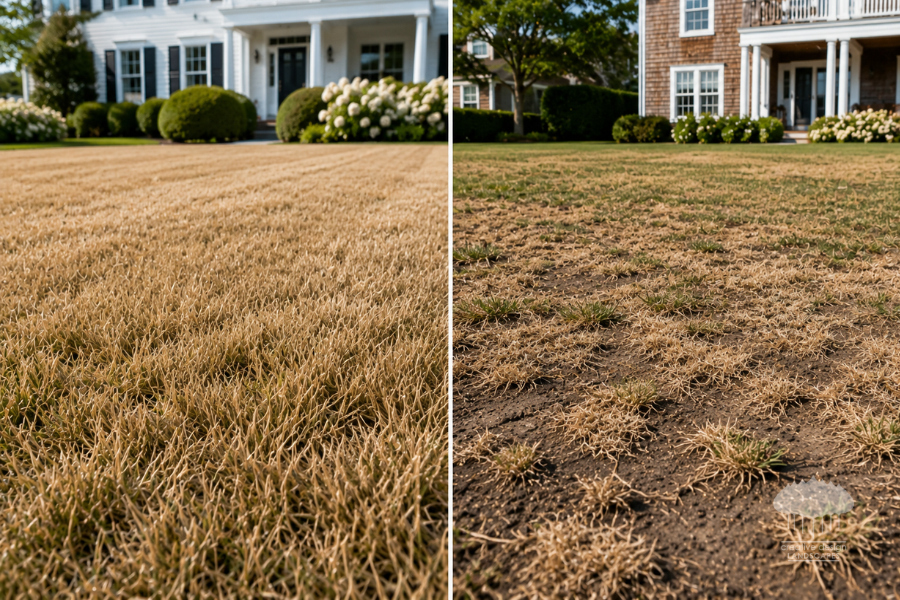
One of the most common points of confusion during a hot summer is whether a brown lawn is dormant or dead. Cool-season grasses will go dormant in response to sustained heat — turning brown and appearing dry — as a natural survival mechanism. This is normal and reversible.
A dormant lawn will feel slightly springy when compressed and will green up again once temperatures drop and consistent moisture returns. A lawn that has crossed into genuine heat damage will not recover in the same way and may require overseeding or reestablishment in fall.
If there is uncertainty about the condition of your turf, a professional lawn care assessment can identify what is happening below the surface and what recovery approach makes sense.
Hamptons Lawn Care Recovery After a Summer Heat Wave
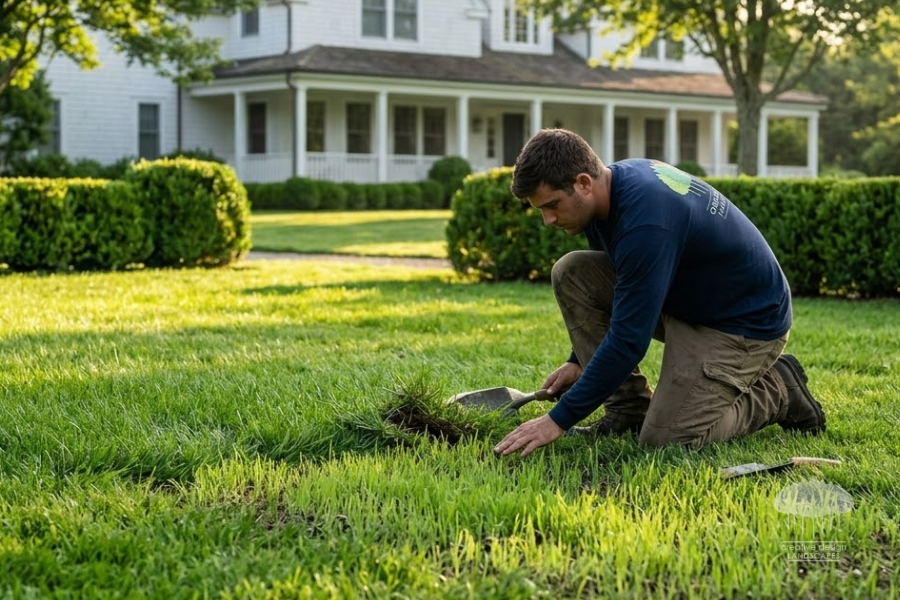
Once temperatures ease, the lawn needs support to come back fully. This is not the time to resume aggressive treatments. Gradual rehydration, resuming a regular mowing schedule at the correct height, and — once the turf has been consistently green again for two to three weeks — returning to a balanced fertilization program are the right sequence.
Fall is the optimal recovery window for cool-season lawns in the Hamptons. Overseeding thin or damaged areas in early September through mid-October allows new grass to establish before the first frost and positions the lawn well for the following spring. A structured Hamptons lawn care plan through the fall and into the next season is the best protection against a repeat.
Let's Talk About Your Lawn
Creative Design Landscapes works with properties throughout the Hamptons and Suffolk County — from seasonal turf maintenance to full landscape installations. If your lawn has been showing signs of heat stress, or if you want to get ahead of it before the next stretch of high temperatures, we are happy to take a look and talk through what makes sense for your property. Reach us at (631) 488-0064 or visit creativedesignlandscapinginc.com to get in touch.
Follow along on Instagram, Facebook, Pinterest, and LinkedIn for seasonal lawn care tips, project highlights, and updates from the field.