
The Hamptons Deer Control: Understanding Your Treatment Options and When to Use Them

Effective Hamptons deer control is not as simple as picking up a product at the garden center. The problem is that the deer deterrent methods many homeowners reach for are applied inconsistently, too late, or without a clear understanding of how each method works — and where it falls short.
Deer pressure is one of the most persistent challenges facing Hamptons properties. It is not a seasonal inconvenience. It is a year-round threat that affects planting beds, perennial borders, newly established shrubs, and the overall integrity of a landscape that took years to build.
Why Deer Damage Is Worse Here Than Most People Expect
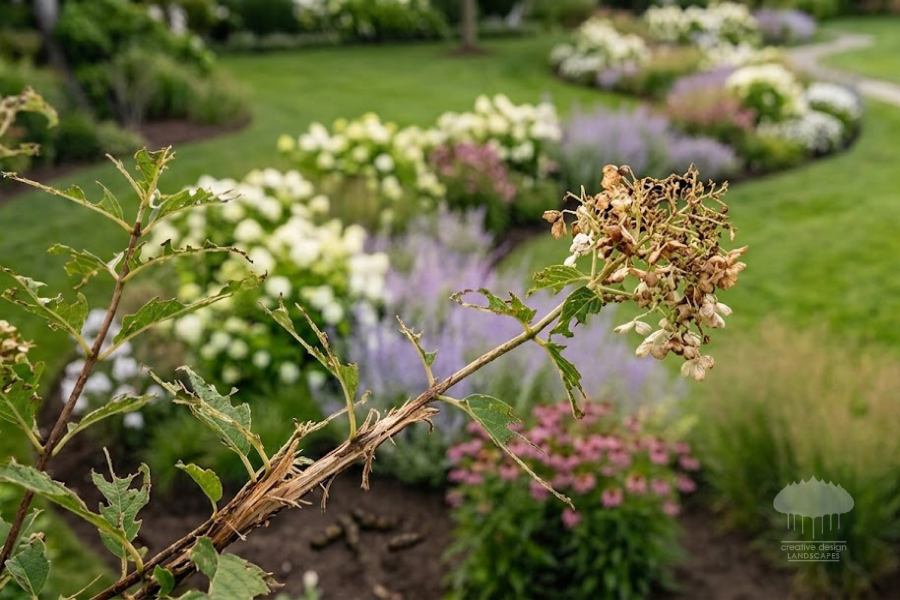
The Hamptons sit within one of the most deer-dense regions on the East Coast. The combination of preserved open land, limited natural predators, and a landscape filled with ornamental plantings creates ideal conditions for high deer populations to move freely across properties.
What makes managing deer pressure in the Hamptons especially difficult is that deer adapt. A treatment that works in early spring may lose effectiveness by summer as animals become familiar with it. Feeding pressure also intensifies seasonally — late fall and winter drive deer toward plantings they would otherwise avoid when more natural food sources are available.
Properties that rely on a single repellent approach almost always experience eventual failure. Understanding the full range of options — and how to layer them — is what makes the difference.
Liquid Repellent Sprays: The Most Common Deer Control Treatment
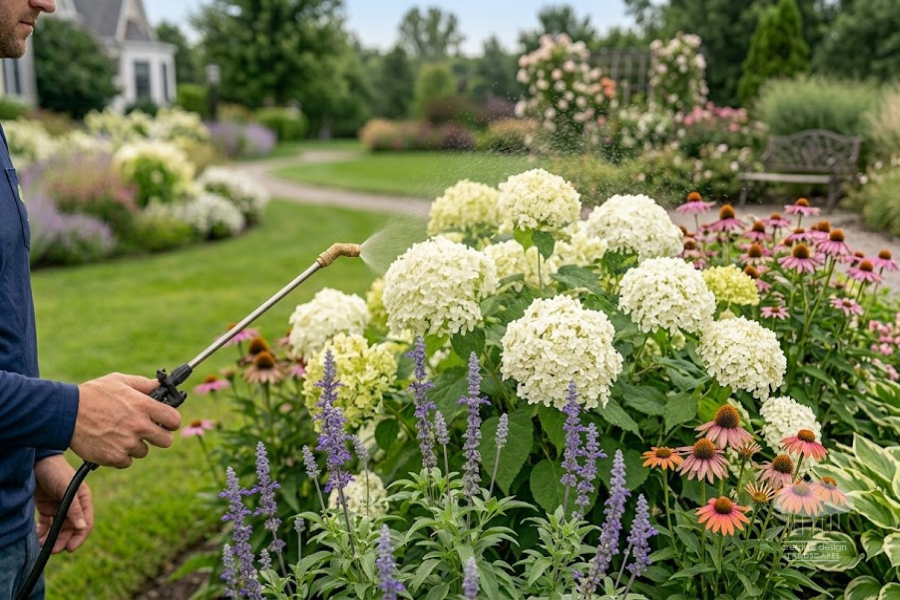
Homeowners use liquid repellents more than any other deer control treatment. They can be effective when applied correctly. They work through scent and taste deterrents — typically putrescent egg solids, garlic oil, or capsaicin — that make treated plants unpleasant for deer to browse.
When to apply: Begin applications in early spring as new growth emerges. Since tender new foliage is particularly vulnerable. Reapply every two to four weeks throughout the growing season, and more frequently after rain.
What to watch for: Coverage needs to be thorough. Spot-treating only the prominent plants while leaving others exposed gives deer an easy alternative. Rotating between product formulations also matters. Using the same repellent application repeatedly allows deer to habituate to the scent over time.
Liquid repellents work best as a consistent, rotating approach rather than a reactive one applied only after damage appears.
Granular Repellents: A Ground-Level Deer Control Treatment
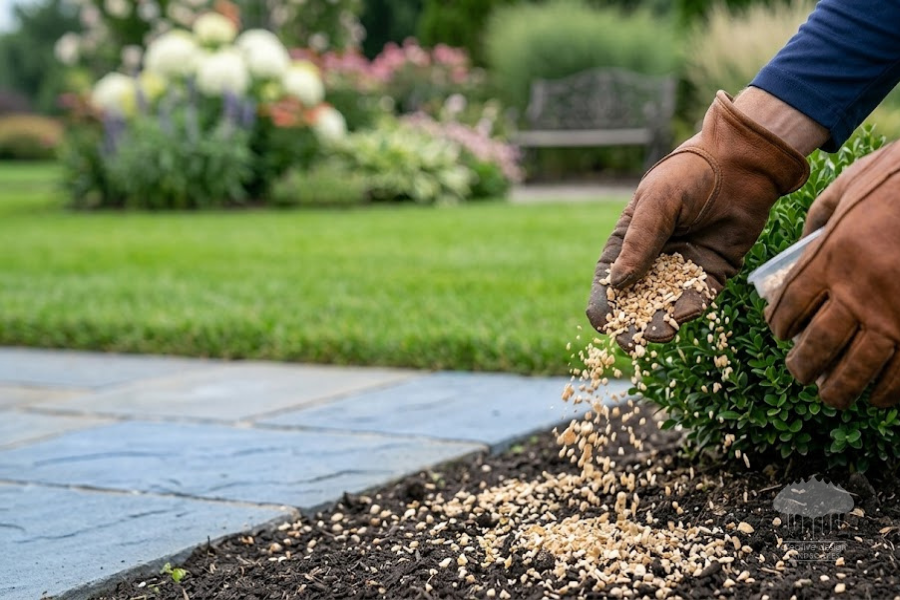
Granular repellents work differently from sprays. Rather than coating the plant itself, this deer deterrent method creates a scent barrier at ground level that discourages deer from entering treated areas. Most contain dried blood, predator urine, or similar organic compounds.
When to apply: Granulars are particularly effective in late fall and winter when spray applications become less practical in cold temperatures. They are also useful around the base of trees, shrubs, and along bed perimeters where spray coverage can be difficult to maintain.
What to watch for: Granulars break down over time, so homeowners need to reapply them after heavy rain or snow. They are a strong complement to a liquid spray routine but are generally not effective as a standalone protective treatment.
Physical Barriers and Protective Wrapping
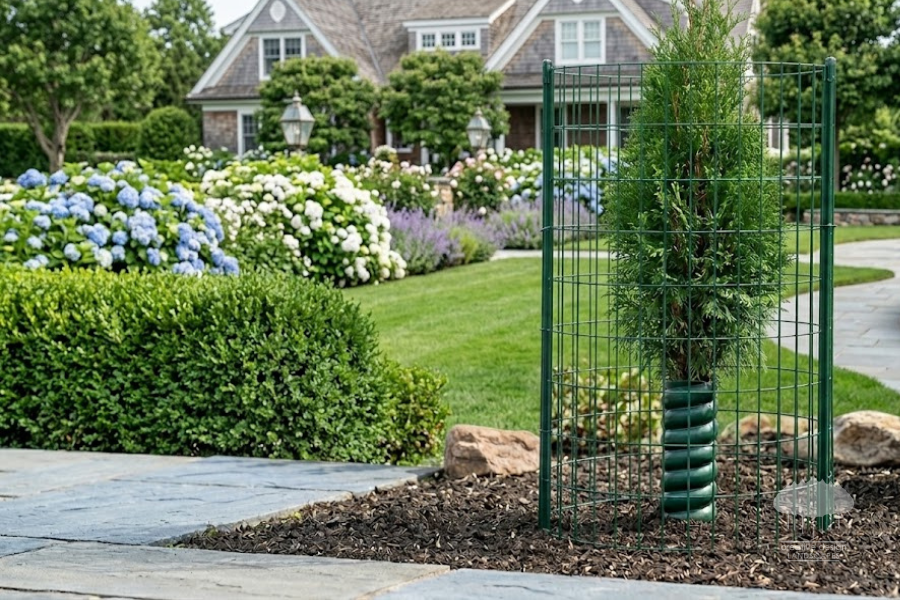
For newly installed plantings or high-value specimens, physical protection offers the strongest and most reliable defense. Tree tubes, wire cages, and deer netting placed around individual plants prevent browsing regardless of how high deer pressure is in a given season.
When to apply: Physical barriers are especially critical in the first one to two years after installation, when plants are establishing and at their most vulnerable. They are also worth deploying in late fall as winter feeding pressure increases — and are one of the few deer management options that work regardless of weather conditions.
What to watch for: Properly size and secure barriers before installing them. Netting that sags or collapses onto a plant can cause damage, and barriers that are too short offer no protection at all — deer can reach far higher than many people anticipate. On refined Hamptons properties, the aesthetic impact of physical barriers is also worth considering, and temporary solutions should be removed once plants are established enough to withstand moderate pressure.
Seasonal Hamptons Deer Control: How Treatments Should Shift Throughout the Year
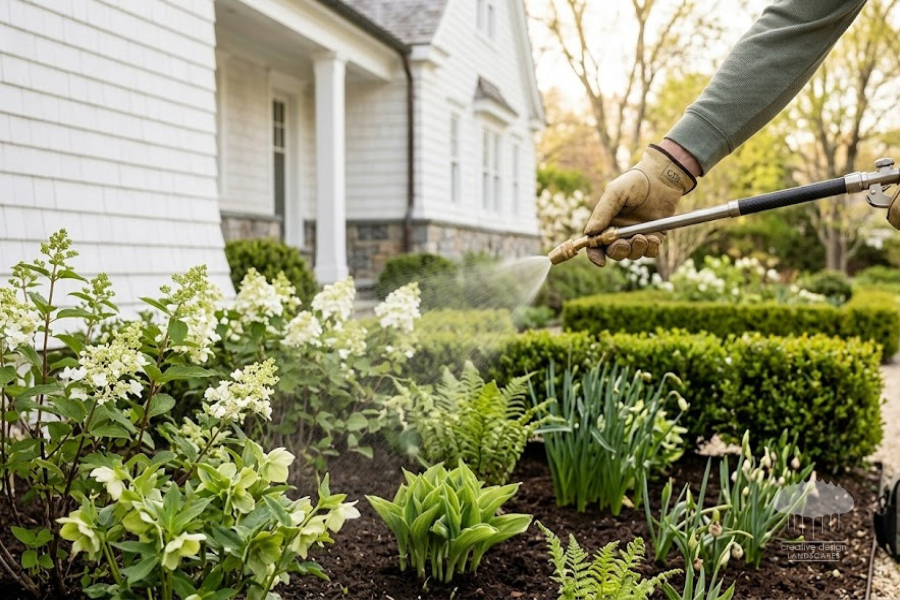
Spring is when feeding pressure is high and plants are at their most exposed. New growth is tender and palatable, and deer are actively foraging after winter. Liquid spray deer control treatments should be in full rotation by early April.
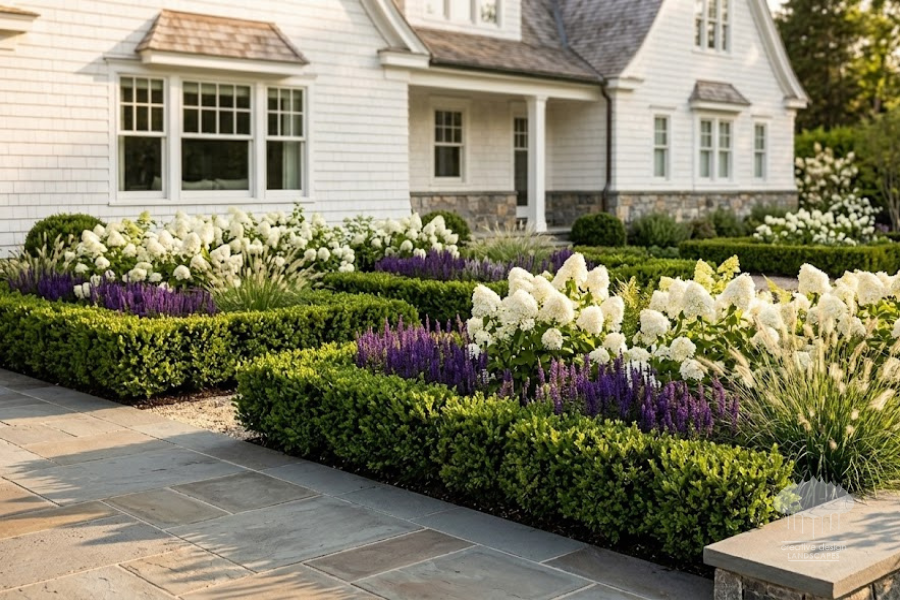
Summer brings more consistent plant hardening and greater natural food availability, which can reduce pressure somewhat — but high-value ornamentals still need coverage. This is also when habituation to a single deer deterrent method becomes a real risk if rotations have not been maintained.
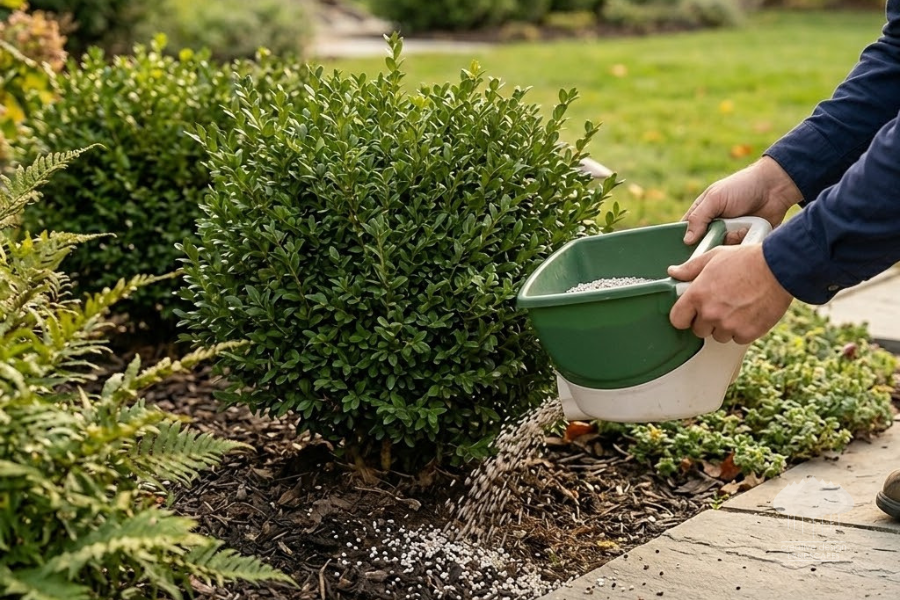
Fall marks a shift back toward higher pressure as natural food sources decline. Granular repellent applications become more important as temperatures drop and liquid sprays become less practical. Arborvitae, hollies, and broadleaf evergreens are particularly at risk heading into winter.
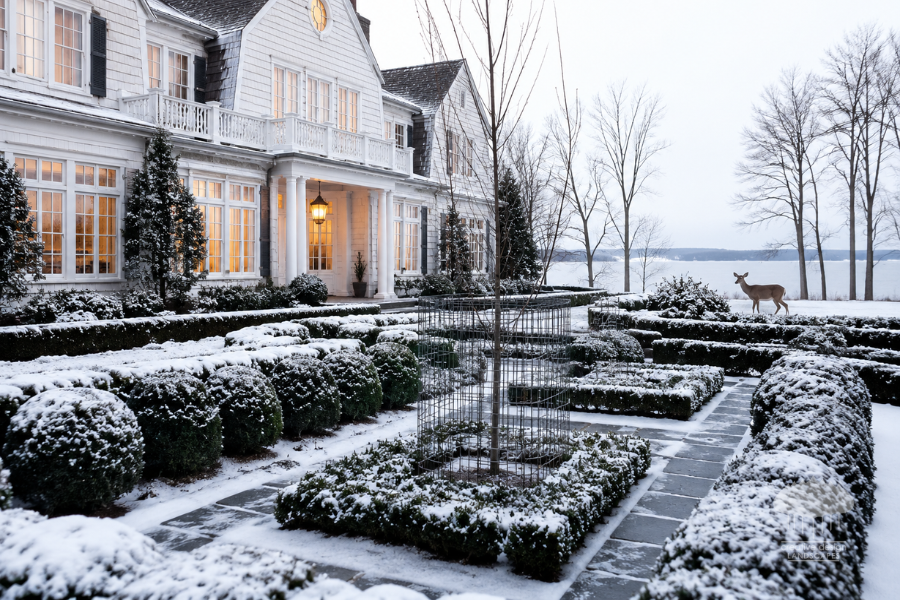
Winter is often when the heaviest damage occurs on unprotected Hamptons properties. Deer feeding pressure is at its peak, and the plants that remain green — evergreen shrubs, ornamental trees, foundation plantings — become primary targets. Physical barriers and granular treatments are the most dependable deer management options through this period.
Plant Selection as a Long-Term Layer of Hamptons Deer Control
Deer deterrent methods work best when paired with intentional plant selection. Incorporating deer-resistant species alongside more vulnerable ornamentals reduces overall exposure without compromising the quality of the landscape.
Bayberry, inkberry holly, ornamental grasses, catmint, salvia, and Russian sage are among the plants that hold up well under deer pressure in this region. These are not compromises — they are plants well suited to the Hamptons environment that integrate naturally into a refined planting plan.
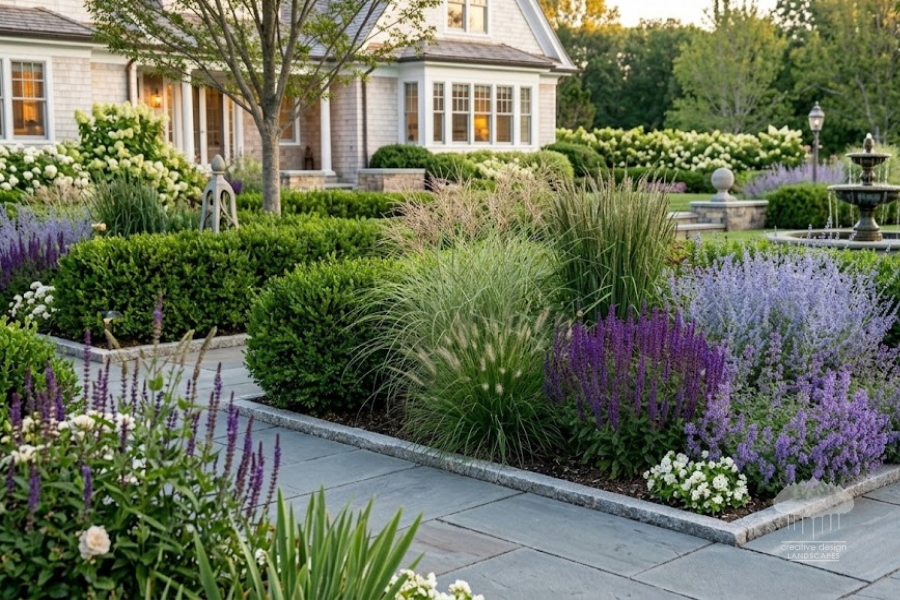
The goal is not to design a landscape entirely around deer avoidance. It is to reduce vulnerability where possible and protect the plants that define the property's character.
The Cost of Skipping Deer Control Treatments
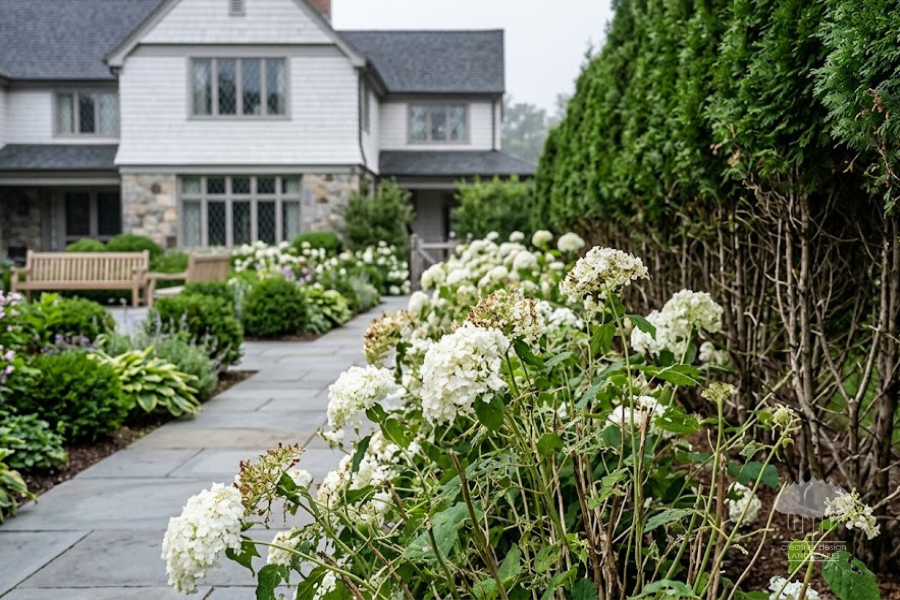
Deer damage accumulates gradually and then becomes very obvious all at once. A hydrangea border that took three seasons to establish can be set back significantly in a single night of heavy browsing. Arborvitae screens that took years to fill in can be stripped to the point where they no longer serve their intended purpose.
Replacement costs, installation labor, and the lost time waiting for new plants to reach maturity all add up quickly. The right protective treatments, applied consistently and at the right time, are a fraction of that cost.
Ready to Protect Your Landscape?
Creative Design Landscapes works with properties throughout the Hamptons and Suffolk County — from seasonal maintenance to full landscape installations. If deer have been a recurring problem on your property, we are happy to talk through what deer management options make the most sense for your plantings and your schedule. Reach us at (631) 488-0064 or visit creativedesignlandscapinginc.com to get in touch.
And if you want to keep up with what we are working on — seasonal planting updates, project highlights, and landscape care tips — come follow along on Instagram, Facebook, Pinterest, and LinkedIn.